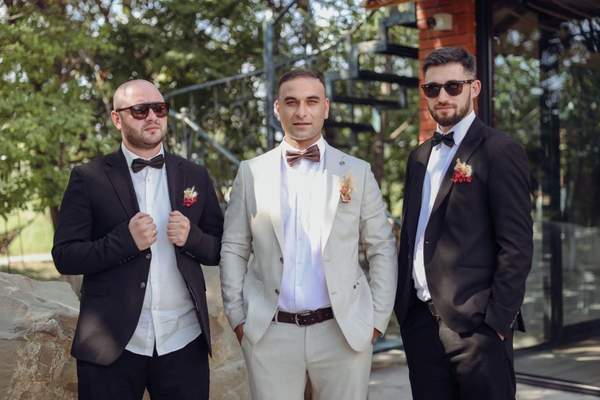
A wedding party can wear beautifully tailored suits and still look disconnected if the ties all tell different stories. Carefully chosen neckwear has the opposite effect: it brings together different suits, echoes the flowers, and gives the groom a subtle way to stand apart. That makes wedding ties for groom and groomsmen one of the most effective details to plan early.
The secret is coordination rather than compulsory matching. Start with the suits and wedding setting, decide what everyone should have in common, then consider color, pattern, fabric, and fit.
Choose a Coordination Style Before Shopping
Matching wedding ties can look polished at a formal celebration, especially with identical suits and shirts. But giving every man the exact same accessory is not the only way to create a cohesive wedding party.
Same color family, different shade
Try dusty blue groomsmen ties with a deeper navy groom wedding tie. The relationship is obvious in photographs, while the tonal difference helps identify the groom without a dramatic contrast.
Same color, different finish
Keep the shade consistent but choose a textured or discreetly patterned tie for the groom. Burgundy matte ties on the groomsmen, for instance, could complement a burgundy silk tie with a subtle woven design.
One repeated detail
When suits or ties vary, repeat a stripe color, fabric texture, or pocket-square shade across the group. That small shared feature makes individual choices feel deliberate rather than random.
Match Tie Colors to the Suits and Wedding Palette
Choose neckwear that works with the suit first, then use flowers and decorations for color inspiration. Navy suits look appealing with burgundy, sage, dusty blue, and understated neutrals. Charcoal suits can work with wine, slate, and silver tones; lighter beige or tan suits often pair nicely with olive, rust, or muted blue.
Instead of matching the most vivid flower in the bouquet, borrow a quieter supporting color. If the flowers combine cream blooms, eucalyptus, and hints of peach, sage ties may look more sophisticated than bright peach ties for the entire party.
Always compare swatches beside the actual jacket and shirt. Two ties labeled “sage green” may have very different undertones. Check them in natural light and indoor lighting, because a color that seems perfect on a shopping screen can look unexpectedly blue or yellow in person.
Keep Patterns Interesting but Controlled
Solid groomsmen ties are a safe choice for group photographs, especially when the boutonnieres have several colors. Fine stripes, tiny dots, and tonal geometric patterns are also suitable, provided the design does not overwhelm the outfit.
If the groom wears a patterned tie, place the groomsmen in plain ties drawn from one of its colors. Alternatively, give the groom a solid tie and choose quiet floral designs for attendants at a relaxed garden wedding.
Think about visual competition. A checked suit, striped shirt, bold pocket square, and colorful tie all demand attention. Select one focal pattern and keep other pieces restrained. Similar thinking applies when coordinating suit patterns and accessories.
Let the Fabric Reflect the Occasion
Wedding neckwear communicates formality through texture and shine. Silk drapes neatly and suits many formal ceremonies. A matte or subtly woven silk feels refined without being overly glossy. Cotton, linen blends, and other textured fabrics can look relaxed with lightweight summer suits or outdoor settings.
Heavier wool or velvet may suit a cooler-weather celebration, but season alone should not dictate the choice. A shiny satin tie can feel out of place with a casual linen suit, while a loosely knitted tie may seem too informal with a highly structured evening outfit.
For the closest color match, order ties from the same fabric collection. Even products using identical color names can differ visibly in sheen. Request fabric samples when ordering wedding ties online for a large group.
Pay Attention to Width, Length, and Knots
Tie width should look balanced with the jacket lapels. Narrower ties typically suit slimmer lapels, while broader lapels can support fuller ties. As a starting point, widths around 7–8 cm work for many modern suits, but proportion matters more than a fixed measurement.
When tied, the tip should normally reach about the waistband or belt area. A tie finishing high above the trousers can make even an expensive suit look unfinished.
A four-in-hand knot has a slightly asymmetric shape and suits many collars. A half-Windsor creates a fuller, more symmetrical knot. The groomsmen do not need identical knots if their collars and body proportions differ; tidy, balanced knots matter more. For another way to distinguish the groom, a bow tie with groomsmen in neckties can also be effective.
A Realistic Wedding Party Color Plan
Imagine an early-autumn wedding featuring navy suits, white shirts, cream flowers, and eucalyptus greenery. Give the groomsmen matte sage ties and choose a deeper olive silk tie for the groom. Use simple white pocket squares across the party and keep the greenery in each boutonniere consistent.
The darker groom tie creates definition, while the shared green family connects everyone to the flowers. Before committing, lay a tie against the suit jacket and a bouquet sample. Take phone photos outdoors and in indoor light. This quick rehearsal often exposes mismatched undertones better than viewing individual products online.
Organize Purchases and the Final Fitting
Count everyone who needs coordinated neckwear, including ushers or family members involved in the wedding party. When people buy their own ties, share the exact item and colorway rather than simply instructing them to purchase a “green tie.” Order early enough to handle replacements and keep a spare if practical.
Ask each person to try the complete outfit before the ceremony. Check the knot, collar fit, and tie length together. Hang or loosely roll ties for storage, following fabric-specific care instructions. A groom and groomsmen attire checklist and a pocket square styling guide can help bring those final accessories together.
Frequently Asked Questions
Should the groom and groomsmen wear identical ties?
No. Identical ties suit a traditional, uniform look, but variations in shade, pattern, or texture can preserve coordination while making the groom distinctive.
What tie color works best with a navy wedding suit?
Burgundy, dusty blue, muted green, and silver are versatile possibilities. The best choice depends on the shirt, flowers, season, and dress code rather than the suit color alone.
Can groomsmen wear patterned ties at a formal wedding?
Yes. Choose fine stripes, small motifs, or tonal patterns and keep the shirt and other accessories relatively simple. Large novelty prints usually feel less formal.
Do all groomsmen need the same tie width?
Not always. Similar proportions create consistency, but differences in jacket lapels, height, and build may call for slightly different widths.
Finish With a Clear Visual Connection
The strongest combinations share something recognizable without forcing every detail to match. Choose a common color story, use fabric and pattern with restraint, and make sure each tie suits its wearer’s proportions. When the wedding party looks connected and the groom still feels individual, the wedding ties have done their job.