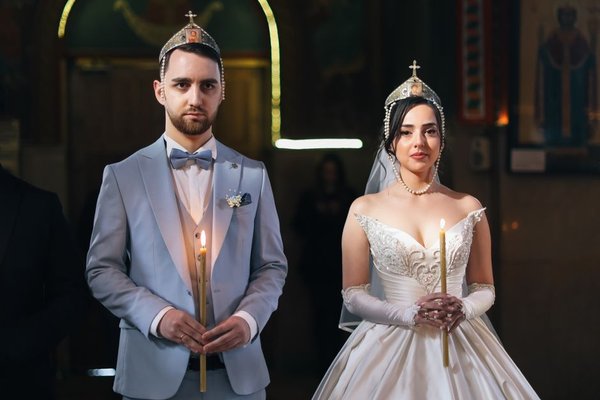
A non religious wedding ceremony can feel every bit as moving as a traditional service. Its meaning comes from your relationship, shared values and promises rather than prayers or faith-based rituals. You can keep familiar moments, including an entrance, vows and a joyful announcement, while choosing words that genuinely sound like you.
Start by deciding what you want guests to feel: welcomed, included, entertained, reflective or some combination. Build around that emotional journey, and choosing readings or rituals becomes easier.
A Simple Structure for a Secular Wedding Ceremony
Many couples find that roughly 15 to 25 minutes gives meaningful moments room to breathe. There is no universal required length for a symbolic celebration, although a legal marriage may have specific elements prescribed by local law.
Arrival and welcome
Begin with music as the wedding party enters, followed by an introduction. Your officiant might say: “Thank you for being here. Today we celebrate two people who have chosen to build a life together, supported by the people who know them best.”
Your story and a reading
The officiant can share how you met, what you appreciate about each other and what marriage means to you. Follow this with a poem, a passage about friendship or words written by someone close. One carefully chosen reading often has more impact than several lengthy ones.
Declarations, vows and rings
Invite each partner to express their decision to marry, make personal promises and exchange rings if desired. The officiant should guide transitions so everyone knows when to stand or speak. A legally recognised marriage may also require approved declarations or vows.
Closing and exit
Finish with a brief affirmation, a kiss if you want one and upbeat music. An announcement can be as straightforward as: “Please join me in celebrating this wonderful couple!”
Write Wording That Sounds Like Real People
A secular wedding ceremony does not need solemn-sounding alternatives to religious language. Sincerity works better. Ask your officiant to use everyday words, specific memories and pauses rather than abstract claims about destiny or perfection.
For an opening, try: “Love is made of ordinary choices: listening when life is busy, finding humour on difficult days and continuing to show up for each other. Today, Maya and Alex are making those choices out loud.” Replace the names with details that belong to your relationship.
For a declaration, the officiant might ask: “Do you choose to share your life with Alex, to treat them with kindness, to be honest when things are difficult and to keep growing together?” Each partner answers, “I do.” Check before replacing wording prescribed for a legal marriage.
Personal Vows Without a Perfect Speech
Start with three sentences: what you love about your partner, one moment that reveals your relationship and a promise you can realistically keep. “I will apologise when I get it wrong” is often more believable than promising you will never argue.
One example reads: “You make everyday life more interesting and the hard days less lonely. I promise to listen before I assume, to keep making time for us and to be on your team even when we disagree. I choose you today, and I intend to keep choosing you.”
Agree on a similar length and level of formality, but keep the individual words a surprise if that appeals to you. Bring printed copies even if you have memorised everything. A guide to writing wedding vows offers another useful starting point for turning memories into promises.
Secular Readings and Unity Ideas
Choose a reading because it reflects your outlook, not because it appears on every wedding list. Contemporary poetry, a favourite novel excerpt or an original note from a relative can work beautifully. Check permissions before reproducing copyrighted words in programmes or online.
You could ask a sibling to write a few lines about partnership in everyday life. Another option is a joint statement: “We believe marriage is a place to practise patience, celebrate curiosity and make room for change.” Original words can feel more intimate than borrowed quotations.
For a unity moment, plant herbs in a shared pot, seal letters for a future anniversary or invite guests to make a spoken promise of support. These civil ceremony ideas are optional. Choose one only if it contributes something personal rather than filling time.
Make Different Beliefs Feel Welcome
When guests have varied religious or cultural backgrounds, explain your choices positively. “We have chosen words that reflect our shared values” is more welcoming than listing what the ceremony excludes. Relatives can participate through a reading, music selection or shared memory.
Picture a couple whose families expect a traditional service but who prefer a nonreligious ceremony script. They could retain a familiar processional, invite parents to offer brief messages and place personal vows at the centre. It still feels recognisably like a wedding, without rituals the couple does not believe in.
Give the officiant the correct pronunciation of names and clear boundaries about jokes or sensitive stories. Rehearse transitions between speakers. A wedding processional order and a ceremony timeline can help everyone feel prepared.
Check the Legal Side Before Booking an Officiant
A civil marriage, a humanist wedding ceremony and a symbolic celebration are not necessarily equivalent. Recognition depends on where the event takes place, who conducts it and which formalities are completed. Ask the local marriage authority what is required before booking an officiant or venue.
Humanist marriages are legally recognised in Scotland and Northern Ireland, but as of 2026 a humanist ceremony alone does not create a legal marriage in England or Wales. Couples there generally need a separate civil marriage. In England and Wales, legal civil ceremonies also have specific wording and nonreligious-content rules. Requirements elsewhere vary.
If you want complete freedom over your personal script, completing the legal formalities separately may be practical. Do not assume a friend who leads the celebration can also legally conduct the marriage.
Frequently Asked Questions
Can a non-religious ceremony include wedding traditions?
Yes. You can retain a processional, wedding party, ring exchange and celebratory exit. None requires a prayer or religious reading. Keep the traditions that feel meaningful.
Who can officiate a secular wedding?
A legally authorised officiant may be necessary for the marriage to be recognised. A celebrant, humanist officiant or friend can often lead a symbolic service, but legal authority varies by location.
How long should a secular ceremony script be?
About 15 to 25 minutes is a useful planning range for many celebrations, including entrances, readings and vows. Read the script aloud during rehearsal because spoken passages take longer than silent reading.
Do we need rings or a unity ritual?
No. Rings and symbolic rituals are personal choices, although legally required declarations may still apply. Your vows can be the central moment without extra activities.
Let the Promises Be the Main Event
The strongest non religious wedding ceremony is not a collection of substitute traditions. It is a clear expression of what you promise each other. Keep the structure simple, use words that sound natural and check legal details separately. Then give your vows, and the people gathered to hear them, the attention they deserve.