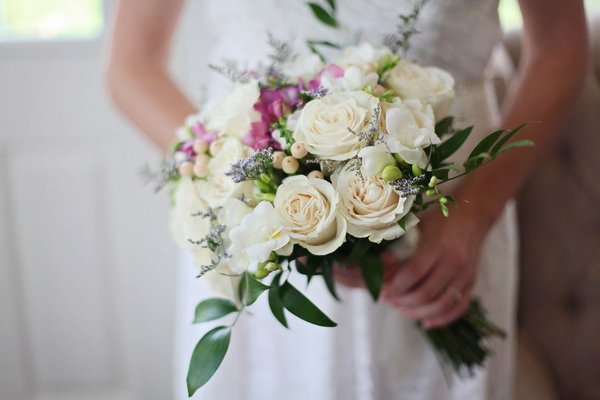
Knowing how to choose a wedding florist starts with a question that photographs alone cannot answer: can this person create your preferred look within your budget, season, and venue restrictions? Wedding flowers are living materials, so even a beautiful portfolio is only part of the picture. You also need a designer who communicates clearly about availability, substitutions, installation, and the details that shape the finished arrangements.
Define the Feeling Before Choosing Specific Blooms
Start with three words that describe your wedding: perhaps relaxed, colourful, and wild, or minimal, sculptural, and elegant. Add your venue, wedding date, approximate guest count, and a realistic floral budget. This gives florists a useful starting point without asking them to copy someone else’s wedding.
Save a handful of inspiration images, but explain what attracts you to each one. Is it the loose shape, soft colour palette, dramatic scale, or mix of textures? You may love a photo featuring peonies without needing peonies themselves. Separating the design from individual flowers creates more flexibility later.
Study Complete Wedding Portfolios
A florist’s social media highlights may feature one spectacular bouquet or ceremony installation. Ask to see full galleries from actual weddings, ideally with a similar setting, guest count, or budget level to yours. Look at how the bouquets, centrepieces, aisle flowers, and larger displays work together.
Notice consistency as well as creativity. Are arrangements balanced from different angles? Does the style still feel convincing in ordinary reception photographs rather than only close-up portraits? A florist specialising in airy garden arrangements may not be the best match for tightly structured, modern designs, even if both are talented.
Make the Wedding Flower Consultation Count
Contact a small shortlist with the same core information so you can compare their responses fairly. Bring your inspiration images, ceremony and reception locations, colour preferences, estimated quantities, and spending range to each wedding flower consultation.
A Practical Wedding Florist Checklist
Before leaving the consultation, make sure you know who will design your flowers, what the starting quote includes, whether there is a minimum spend, how many design revisions are offered, and when quantities must be finalised. Ask who will be your contact as the wedding approaches and who will supervise setup on the day.
Compare Proposals by Scope, Not the Bottom Line
Two floral quotes can look dramatically different while covering different services. Request itemised proposals showing bouquets, buttonholes or boutonnieres, ceremony arrangements, centrepieces, decorative vessels, rental items, delivery, installation, and removal where applicable. Check taxes and service charges as well.
If one proposal is cheaper, ask whether its centrepieces are smaller, whether it excludes hired containers, or whether you will need someone else to move arrangements between spaces. A lower initial price is not necessarily better value if essential work is missing.
Decide where flowers will have the greatest impact. For example, a couple with a modest budget might prioritise a distinctive bridal bouquet and an arrangement at the ceremony entrance, then use simple bud vases at dinner. Reviewing a wedding budget breakdown can help keep those choices aligned with other priorities.
Discuss Seasons and Floral Substitutions Early
Flower availability varies with growing conditions, suppliers, shipping, and the wedding date. A florist who promises an exact flower variety months in advance without qualifications may be overlooking that uncertainty. Ask which blooms are reliably available around your date, which may be costly or unpredictable, and what alternatives create a similar effect.
The best approach is to agree on what cannot change. Perhaps the palette must stay ivory and soft green, but flower varieties may vary. Or perhaps you want a particular shape in the bridal bouquet, while colour is flexible. These priorities give your florist room to handle floral substitutions without disappointing you.
Imagine requesting pale pink peonies for a late-summer wedding. Rather than assuming those exact stems will be available locally, ask the florist to propose seasonal flowers with comparable fullness and movement. Request photographs of possible alternatives and agree whether approval is needed before a significant change.
Investigate Delivery, Setup, and Repurposing
A floral plan is also a timetable. Confirm when flowers will arrive, how they will be stored before use, how long installations take, and whether your venue permits early access. Large structures may require separate setup arrangements, secure attachment methods, or approval from venue staff.
Ask whether ceremony flowers can move to the reception and who would physically relocate them. Repurposing can be worthwhile, but not every design travels safely, and tight schedules may make a move impractical. Match your florist’s plan to your ceremony and reception timeline rather than assuming it will happen automatically.
Clarify end-of-night responsibilities, too. Rental vases, stands, and mechanics may need collection; some flowers may be yours to keep while containers are not. Your coordinator, venue, and florist should agree who removes each item.
Read the Florist Contract Carefully
A written florist contract should match the final proposal. Check quantities, design descriptions, total cost, payment deadlines, delivery locations, setup and breakdown responsibilities, rentals, and the process for design changes. Make sure there is a clear policy for substitutions, including what happens if a major visual feature must change.
Review cancellation, postponement, refund, and force-majeure terms before paying a retainer. Ask about any additional fees if your venue access or event schedule changes. A clear agreement is especially useful when many wedding vendors are coordinating around the same narrow setup window.
Recognise Signs of a Good Working Relationship
Look for prompt, specific answers, realistic alternatives, and genuine interest in your priorities. Be cautious if a florist will not show real work, refuses to provide an itemised quote, dismisses your budget, or cannot explain how unavailable flowers would be replaced. You can also compare their communication with your broader questions to ask wedding vendors.
Frequently Asked Questions
How far in advance should I book a wedding florist?
Begin contacting florists once your date and venue are confirmed. Popular dates and complex installations may require earlier booking, while simpler orders can sometimes be arranged closer to the event. Availability varies by business and season.
Should I choose a florist based on price or style?
Look for a match on both. Strong style alignment matters because floral design is interpretive, but the proposal must also fit your spending limit. Ask how the florist would adjust scale or flower choices before choosing solely on the lowest quote.
Can I request exact flowers for my wedding?
Yes, but availability cannot always be guaranteed. Identify any meaningful varieties, ask about their season, and agree on acceptable substitutes. Put significant requirements and the substitution process in writing.
Do wedding florists usually handle setup and removal?
Some offer full-service installation and collection; others provide delivery or simpler arrangements only. Never assume these services are included. Confirm the responsibilities and fees in your proposal and contract.
Choose the Florist Who Can Protect Your Vision
The right florist does more than reproduce an inspiration photograph. They understand your aesthetic, give an honest account of costs, offer thoughtful seasonal alternatives, and have a workable plan for the venue. When the portfolio, proposal, communication, and contract all tell the same story, you can book with greater confidence.