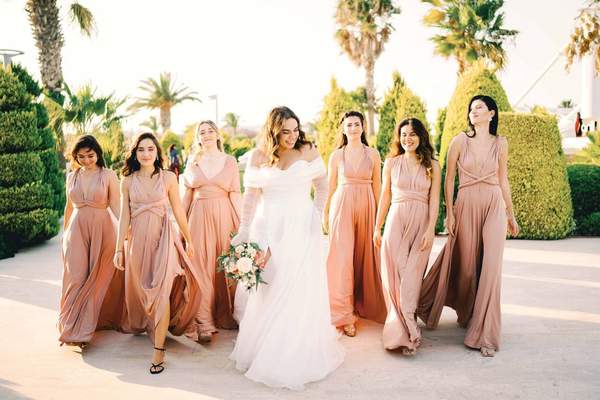
Terracotta bridesmaid dresses bring natural warmth to a wedding without making the celebration feel strictly autumnal. Inspired by sunbaked clay, this color sits between orange, red, and brown. It works beautifully with greenery, wooden details, and candlelight, but it can also look polished at a modern indoor ceremony.
The key is deciding which terracotta you actually want. Dressmakers use the name for everything from dusty cinnamon to vivid copper. Once you settle on a specific shade, choosing fabrics, flowers, shoes, and accessories becomes much easier.
Choose the Right Terracotta Shade
Terracotta is a color family rather than a universal swatch. One retailer’s version may look pinkish and muted, while another’s appears brighter and orange. Fabric sheen, photography, and screen settings can create further differences.
Terracotta vs. rust vs. burnt orange
Classic terracotta usually resembles muted reddish clay. Rust bridesmaid dresses lean deeper and browner, which often feels moodier. Burnt orange bridesmaid dresses generally appear more saturated and noticeably orange. None is automatically better; the decision depends on the setting and supporting colors.
For a soft garden ceremony, consider dusty clay. A candlelit autumn reception may suit cinnamon or rust. For a sunny late-summer wedding, an energetic burnt orange could be beautiful. Compare actual fabric swatches rather than relying on the shade names in online listings.
Help everyone feel good in the color
No single terracotta flatters every complexion equally. Someone who prefers a rosy clay may dislike a yellow-orange version, while another bridesmaid may love the contrast of deep rust. Hold several swatches near each person’s face in natural light and take unfiltered photographs.
If the wedding party has varied preferences, choose a controlled range of neighboring shades. Keeping the dresses similarly muted or similarly rich makes the mix look intentional while giving individuals room to choose.
Use Fabric to Define the Atmosphere
Fabric affects how this warm color reads. Chiffon softens terracotta and drapes lightly, making it appealing for outdoor spring and summer weddings. Satin reflects light, so a copper dress may appear brighter in photographs. Crepe offers a smoother, generally less shiny appearance; velvet gives deeper shades a rich texture for cooler months.
Think beyond the styled product image. Consider weather, lining, movement, and formality. If bridesmaids choose different silhouettes, repeating one fabric can make a terracotta wedding party feel coordinated. If you mix fabrics, examine swatches together: satin and chiffon labeled with the same color can look surprisingly different.
Build a Warm Palette With Contrast
Earthy wedding colors work best when they have breathing room. Cream, ivory, champagne, and oat can soften terracotta. Sage and olive greenery introduce contrast; chocolate brown or espresso adds depth. Blush or peach can bring a gentler romantic touch.
Try three main components: terracotta dresses, one light neutral, and one accent. Clay dresses, ivory flowers, and sage table linens create an airy garden look. Exchange sage for dark brown and deeper foliage, and the atmosphere turns more autumnal.
A wider guide to earthy wedding color palettes can help coordinate stationery, linens, and attire. You do not need orange flowers, orange napkins, and orange ties simply because the dresses are terracotta.
Coordinate Flowers and Accessories
Choose bouquets that stand apart
Cream roses, ivory dahlias, pale peach flowers, and foliage in varied greens can complement clay-colored dresses. For fall, burgundy accents add depth. Ask your florist to compare a fabric swatch with the proposed flowers: bouquets filled entirely with similar orange blooms can visually merge into the dresses.
Seasonal availability varies, so decide on the colors and overall feeling first. A florist can suggest suitable locally available alternatives. Autumn wedding flower ideas may offer inspiration, but flexibility often creates the best result.
Keep shoes and jewelry thoughtful
Champagne, tan, soft gold, and neutral shoes are reliable pairings. Allow each bridesmaid to choose a neutral that suits their skin tone; one so-called nude shade will not suit everyone. Gold and bronze jewelry emphasize warmth, while simple silver can work with cooler accents.
Check the ceremony surface before selecting heels. Block heels or elegant flats are practical on grass and gravel, whereas narrow stilettos may sink. Modest earrings and a simple clutch usually provide enough polish without competing with the dresses.
Adapt Terracotta to the Season
Fall is an obvious match for terracotta, but not the only one. Spring suits lighter clay with fresh foliage. Summer calls for airy fabrics and pale accessories. In autumn, richer rust shades, deeper greenery, and candlelight feel natural. Winter celebrations can feature darker terracotta velvet with cream bouquets and dark suits.
Plan for temperature changes. An outdoor afternoon ceremony followed by a cool evening reception may require coordinated wraps. A guide to bridesmaid dress fabrics can help compare comfort, drape, and suitability for the venue.
A Realistic Wedding Party Styling Example
Imagine five bridesmaids at a September vineyard wedding. Three choose muted clay chiffon and two wear a slightly deeper rust from the same retailer. They select different necklines but keep the fabric and dress length consistent. Everyone chooses comfortable neutral shoes.
Ivory-and-peach bouquets, olive foliage, and espresso suits tie the group together. Before ordering, the couple photographs all swatches outdoors and under warm reception lighting. This simple check reveals whether one rust option looks much brighter than expected.
Check These Details Before Ordering
Request physical swatches early, especially if ordering from different brands. Confirm size charts, production times, alteration needs, and return policies. Leave enough time for tailoring and ask each bridesmaid to test how the dress feels while sitting, walking, and raising her arms.
Make the approved shade range, length, and formality clear to everyone. If dresses arrive from different dye lots, place them together in daylight; expecting an exact match across separate orders can lead to disappointment.
Frequently Asked Questions
Are terracotta bridesmaid dresses only for fall weddings?
No. Lighter terracotta with chiffon and fresh greenery suits warmer months. Deeper rust, satin, or velvet can feel particularly appropriate for fall and winter.
What color suits go with terracotta dresses?
Tan, stone, espresso, charcoal, and selected muted greens can all work. Compare the actual suit fabric with the dresses before making a final choice.
Can bridesmaids wear different terracotta shades?
Yes. Keep the range reasonably close and coordinate the fabric, length, or saturation. Review every swatch together under consistent lighting.
What shoes look best with terracotta dresses?
Champagne, soft gold, tan, and skin-tone-friendly neutrals are versatile. Choose heel heights that suit the venue and each person’s comfort.
Bring the Look Together
The appeal of terracotta is its warmth without excessive formality. Start with real swatches, choose fabrics for the setting, and use flowers and accessories to create gentle contrast. Give the bridesmaids freedom to find flattering fits, and the finished party will feel cohesive, personal, and naturally elegant.