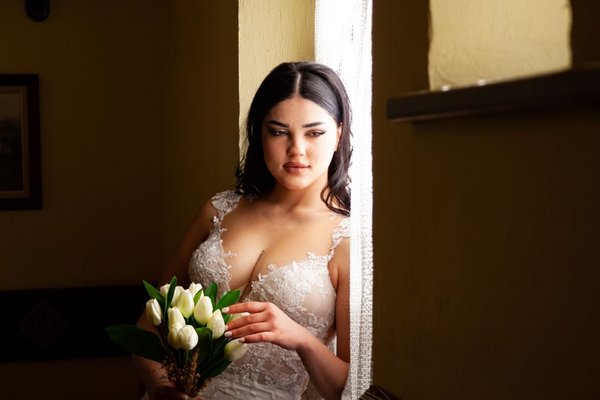
This wedding dress neckline guide is less about finding a “correct” shape for your body and more about deciding what you want the dress to emphasize, how much support you need, and how the neckline works with the rest of your bridal look. The most useful way to compare wedding dress neck shapes is to look at proportion, construction, and comfort together.
Start with the effect you want
Traditional bridal advice often assigns certain necklines to certain body shapes, but those rules can be limiting. A better approach is to ask what visual effect you prefer. Do you want to open the chest, frame the collarbones, create a stronger line across the shoulders, or keep the neckline higher and more covered?
Construction matters too. Boning, cups, lining, straps, and bodice fit often affect support more than the neckline name itself. If support is important, ask how the gown is built rather than assuming a higher neckline will automatically feel more secure.
Sweetheart neckline: soft and romantic
A sweetheart neckline wedding dress curves over the bust and dips gently in the center, creating the familiar top of a heart shape. It remains one of the most recognizable bridal neckline styles because it adds softness while keeping the collarbone and upper chest visible.
Sweetheart necklines can be strapless, paired with straps, or placed beneath sheer illusion fabric. A deeper sweetheart feels more dramatic, while a shallow curve is subtler. Because the neckline already creates a decorative shape, jewelry can stay simple. A fine pendant or statement earrings are usually enough.
Square neck: clean and structured
A square neck wedding dress has a straight or nearly straight line across the chest with vertical or slightly angled straps. The result feels polished and modern without needing heavy embellishment. It works especially well with minimalist gowns, fitted bodices, and vintage-inspired silhouettes.
The horizontal line can visually broaden the upper chest while the open center highlights the collarbones. If you want more coverage, try a higher square cut or wider straps. A short necklace, delicate chain, or no necklace at all can work well because the neckline already forms a strong frame.
V-neck: lengthening and adaptable
V-necks range from modest shapes to plunging cuts supported by illusion mesh. Their diagonal lines draw the eye downward, which can make the upper body look longer. That flexibility makes the V-neck one of the most adaptable wedding dress neck shapes.
Support varies widely. A deep V may depend on secure cups, bodice structure, or illusion panels. During alterations, sit, bend slightly, raise your arms, and move as you expect to on the wedding day. A neckline that looks perfect while standing still can behave differently once you dance or hug guests.
Off-the-shoulder: romantic with a movement check
Off-the-shoulder necklines sit below the shoulders and create a wide line across the upper body. Draped tulle feels soft and romantic, while satin bands look more sculptural. The style naturally draws attention to the collarbones and shoulders.
The main concern is movement. Some off-the-shoulder sleeves can restrict how high you lift your arms. At a fitting, reach forward as if hugging someone and lift your arms as if dancing. If the sleeves pull the bodice upward or dig into your arms, the fit may need adjustment.
Bateau, halter, scoop, and illusion necklines
A bateau, or boat neckline, runs wide across the collarbone from shoulder to shoulder. It offers more coverage than a scoop or V-neck while still emphasizing the neck and shoulders.
A halter rises toward or wraps around the neck, leaving more of the shoulders exposed. Check for pressure at the back of the neck and under the arms, especially if the dress is heavy.
A scoop neckline has a rounded shape that can be cut high or low, making it a useful middle ground between a square neck and a V. Illusion necklines use sheer tulle or mesh to create coverage while keeping the underlying bodice visible. Good illusion mesh should lie flat and blend reasonably with your skin tone.
How to compare necklines during a bridal appointment
Do not judge a neckline only from the front mirror. Take photos from the front and side, then sit down and check how it behaves with your natural posture. If possible, try two gowns with similar silhouettes but different necklines. That makes it easier to see the neckline’s effect without confusing it with changes in skirt shape or fabric.
For example, imagine you like a fitted satin gown but cannot decide between square and sweetheart. The square version may create a sharper, fashion-forward frame, while the sweetheart version softens the same silhouette. Neither is universally more flattering; they simply create different emphasis. It is also a useful moment to think about wedding dress silhouettes, bridal jewelry ideas, and wedding dress fabrics as connected choices.
Support and alterations matter as much as style
Before buying, ask whether the gown is intended to be worn with a bra, built-in cups, shapewear, or no separate undergarment. Strapless and low-back gowns often rely on internal corsetry. A bridal seamstress may be able to refine strap length, cup placement, neckline depth, or gaping, but major changes can affect boning, lace placement, and the bodice itself.
If you keep pulling the neckline up, pressing it down, or checking for gaps in the fitting room, you are likely to notice the same issue on the wedding day. Comfort should be part of the decision, not an afterthought.
Frequently asked questions
Which wedding dress neckline is most supportive?
Support depends more on bodice construction than on neckline alone. Wider straps, firm fabric, boning, secure cups, and a well-fitted waist can all improve stability. A square neck with straps may feel naturally secure, but a properly fitted strapless sweetheart can also offer strong support.
What neckline works best with a necklace?
Open necklines such as sweetheart, scoop, and many V-necks usually leave room for a necklace. High neck, embellished bateau, and halter styles often look cleaner with earrings instead. Match the jewelry scale to the detail already present on the bodice.
Can a neckline be changed during alterations?
Minor changes are often possible, such as reducing gaping, refining straps, or slightly changing the depth. Major changes may affect cups, boning, lace placement, or the bodice structure, so discuss them with an experienced bridal alterations specialist before buying.
How do I know if a neckline is comfortable enough?
Sit, walk, bend slightly, hug someone, and raise your arms during the fitting. Check for slipping, pressure, pulling, or gaping. A neckline should stay secure without constant adjustment and let you move naturally throughout the day.
Choose the neckline that supports the whole look
The best neckline is the one that works with your gown’s structure, preferred coverage, accessories, and the way you want to feel in the dress. Compare bridal neckline styles in motion rather than relying on rigid body-type rules, and pay as much attention to construction as appearance. When the neckline feels secure and lets you move without fuss, it is doing exactly what it should.