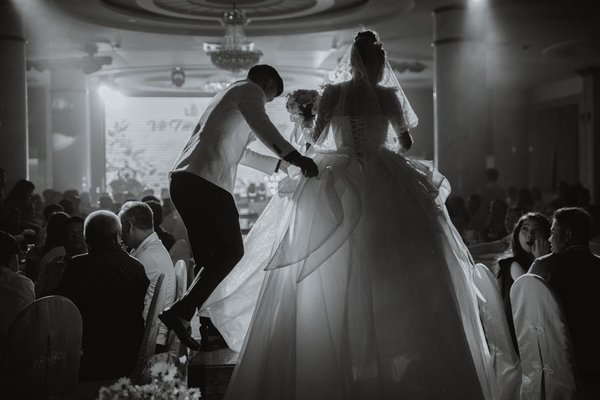
A wedding dress train makes a memorable entrance, but it can become awkward when you greet guests, navigate tables or dance. A bustle lifts the train so you can move comfortably without carrying it. The best design also preserves the gown’s shape instead of leaving an untidy bundle of fabric at the back.
Wedding dress bustle types differ in where the fabric is secured and how the finished skirt looks. American, French, ballroom, Austrian and train-flip styles each offer a different balance of appearance, practicality and complexity.
What Is a Wedding Dress Bustle?
A wedding dress train bustle is a custom alteration that temporarily raises trailing fabric off the floor. Your seamstress adds loops, buttons, hooks or ties, usually during alterations. You leave the train down for the ceremony and photographs, then secure it for the reception.
Most gowns do not come with a finished bustle. Its attachment points must suit your final hem length, the dress’s construction and the weight of its train. A bustle also doesn’t replace correct hemming at the front.
Five Wedding Dress Bustle Types Explained
American Bustle: Visible Draped Folds
The American bustle, also called an over-bustle, lifts the train onto the outside of the skirt. Fabric loops fasten to discreet hooks or buttons, creating a soft waterfall of folds. A short train might need one fastening point, while longer, wider trains generally need several.
It is a popular choice for A-line gowns and ball gowns because the draping often complements their fuller silhouettes. The seamstress should position the folds carefully if the train has lace edging or a distinctive embroidered motif.
French Bustle: Gathered Underneath
A French bustle, or under-bustle, draws the train up beneath the skirt, commonly using pairs of ribbons or ties. The hardware stays hidden and the gathered fabric creates gentle fullness rather than an obvious waterfall across the back.
This can suit brides who want a subtler finish. However, lining, seam placement and skirt volume matter. Some fitted gowns accommodate an under-bustle beautifully; others become bulky where the fabric is gathered. Judge the result on the actual dress.
Ballroom Bustle: The Train Nearly Disappears
A ballroom bustle uses multiple attachment points to tuck the train away and create the appearance of an even, floor-length hem. It appeals to brides who want their reception dress to look almost train-free.
The trade-off is complexity. Long or heavy trains may require numerous carefully spaced fasteners, and layers must sit smoothly. Ask to see the finished bustle from the side as well as behind.
Austrian Bustle: Vertical Ruching
Rather than making horizontal folds, an Austrian bustle gathers the train upward into vertical, curtain-like ruching, generally with drawstrings or ribbons. The gathered fabric becomes part of the dress’s decorative effect.
Light, flowing fabrics such as chiffon and organza are promising candidates. Thick, stiff or heavily beaded materials may not gather or support this design properly, so your alterations specialist should test the fabric.
Train-Flip Bustle: Clarify the Finish
The name train-flip bustle isn’t standardised across bridal shops. It may describe folding or turning the train inward and securing it to reshape the back hem. Some seamstresses use other names for similar fold-under techniques.
Ask for a pinned demonstration rather than relying on the label. Check where the decorative edge ends up, whether the fabric forms unwanted bulk and whether the back hem clears the floor.
Which Bridal Bustle Style Suits Your Dress?
Think first about the look you want after the ceremony. An American bustle can give a chapel-train A-line gown an attractive draped back. A ballroom bustle may suit a full skirt when you prefer a cleaner reception silhouette. An Austrian design can make lightweight fabric look deliberately gathered.
Mermaid and trumpet dresses need extra care because fabric gathered around the hips or knees can interrupt their fitted shape. Ask your seamstress to compare French or custom bustle placements while you move, rather than assuming one style always works.
Train length matters too. A very short sweep train may not need bustling. A long cathedral train usually requires multiple supported points or another train-management plan. Understanding wedding dress train lengths before fittings can make this decision easier.
The Fitting Test That Prevents Reception Problems
Don’t approve a bustle solely because it looks attractive while you stand still. Once your seamstress pins it, walk, turn, sit in a chair and try several dance steps. Check whether any corner drags, the fabric catches under your shoes or a fastener pulls against a delicate seam.
Consider a lace-edged chapel train being worn at an outdoor ceremony followed by a crowded reception. One central attachment might lift the middle but leave both lace corners brushing the ground. Additional support points may distribute the weight while keeping the edging visible.
Bring your reception footwear to the appointment. A bustle that clears the floor with heels might hang too low after you switch to flats. Add this test to your wedding dress fitting checklist and look at photos from several angles.
Plan Who Will Fasten the Bustle
Have a trusted friend or attendant attend the final fitting and practise the fastening sequence. Numbered or colour-coded ties can help, particularly for a French bustle with several internal pairs. Take a short video and photograph the completed result.
Discuss the bustle early in your wedding dress alterations timeline. Complicated trains may require additional fitting time, and a last-minute fastening arrangement is harder to test properly.
A removable train or wrist loop is another possibility. A wrist loop lets you carry lightweight fabric briefly, but it is not hands-free and can tire your arm during a long reception.
Frequently Asked Questions
What is the easiest type of wedding dress bustle?
A simple American bustle with a few clearly marked fasteners is often easy to manage. Still, a complex over-bustle can take longer than a French bustle with well-labelled ties. Fastener placement matters more than the name.
Can any wedding dress be bustled?
Many gowns with trains can be bustled, but the right solution depends on construction, embellishment and weight. Some short trains need no bustle; detachable trains or custom arrangements may suit other dresses better.
When should the bustle be fastened?
Typically, after the ceremony and formal train photographs, before prolonged mingling or dancing. Arrange a convenient moment with the person helping you so there is no rush.
How much does a wedding dress bustle cost?
Cost depends on location, alterations shop, fabric, train weight and the number of attachment points. A simple design usually requires less labour than a complex multi-point bustle. Ask for a quote after your seamstress has inspected the gown.
Choose a Bustle You Can Enjoy Wearing
The most successful bustle is secure, comfortable and visually intentional. Compare the American, French, ballroom, Austrian and train-flip possibilities on your own dress, then test your favourite while moving. That rehearsal, plus a helper who knows the fasteners, makes the reception far easier.