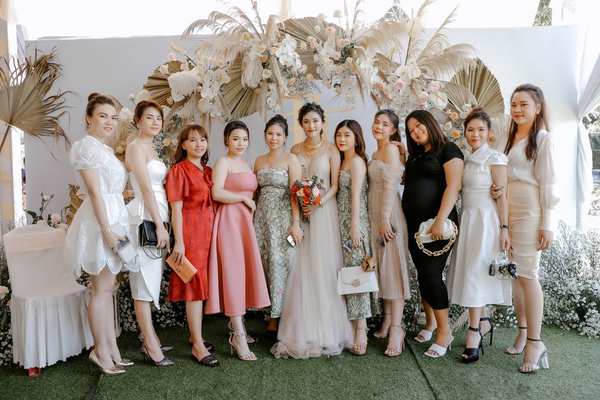
Spring weddings invite lighter colors and softer fabrics, but the forecast rarely gets the memo. A sunny afternoon ceremony can lead to a chilly reception, while a garden venue that looked perfect online may have damp grass underfoot. The best spring wedding guest attire feels celebratory without leaving you shivering, overheated, or worried about your shoes.
Start with the invitation, then consider the location, time of day, and weather. You can build a spring wedding guest outfit around a floral dress, a tailored suit, a polished jumpsuit, or elegant separates.
Let the Dress Code Lead, Not the Season
Spring colors are an option, not a substitute for the requested level of formality. Check the invitation or wedding website before choosing a hemline, suit, or footwear.
Black Tie and Formal
Black tie generally calls for an evening gown or tuxedo. At a formal or black-tie-optional celebration, an elevated long dress, dressy tailored ensemble, or dark suit may be appropriate, depending on the wording. Choose refined fabrics and dress shoes; a pastel color alone will not make a casual sundress formal.
Cocktail Attire
Cocktail is a useful middle ground. A satin or crepe midi dress, sophisticated jumpsuit, or suit with a dress shirt fits many spring cocktail weddings. For more guidance, compare options in a wedding guest dress code guide before shopping.
Semi-Formal, Dressy Casual, and Casual
A spring wedding dress code marked semi-formal often suits a dressy midi, tailored trousers with an elegant blouse, or a jacket with coordinated slacks. Dressy casual can be more relaxed, but still intentional. Even at a casual wedding, avoid assuming everyday jeans or athletic sneakers are welcome unless the couple explicitly says so.
Choose Colors That Feel Fresh but Respectful
Sage, dusty blue, lilac, rose, butter yellow, and soft terracotta all sit comfortably in a spring palette. Black and navy are also acceptable when styled for the occasion; spring does not require everyone to wear pastels.
Florals are popular for good reason, yet they are hardly mandatory. Consider a subtle botanical pattern, a solid dress with colorful accessories, or a tie with a small floral motif. Avoid white, ivory, and outfits that could photograph as predominantly bridal unless the couple specifically requests them. When a print has a pale background, step back and check its overall appearance.
For additional ideas that don’t rely on flowers, look at spring wedding guest outfit ideas built around color blocking, texture, and tailored separates.
Pick Fabrics for the Temperature You Will Actually Feel
Airy chiffon and georgette drape nicely for daytime events, while crepe and lightweight suiting offer structure without unnecessary bulk. Satin can look elegant, but some weaves reveal water spots easily. Linen blends suit relaxed outdoor settings, though pure linen wrinkles readily and may feel too casual for a formal invitation.
Think about lining, too. An unlined dress may feel breezy in the afternoon but exposed once the temperature drops. A breathable lining, sleeves, or slightly heavier fabric can make early spring dressing simpler than relying on a very thin outfit.
Use Spring Guest Layers Without Hiding the Outfit
One removable layer is usually more helpful than piling on accessories. For a cocktail dress, consider a cropped tailored jacket, elegant wrap, or lightweight coat that complements the silhouette. A fine-knit layer might suit a relaxed daytime event but can look underdressed at a black-tie wedding.
A blazer naturally works with trousers, jumpsuits, and many dresses. For suits, a light overcoat or trench can cover the journey to the venue; remove it once indoors. Check whether the ceremony and reception are both outside, because an unheated tent can stay cold after sunset.
Here’s a practical test: put on the full outfit, add your chosen layer, then take it off. Both versions should look finished. If the bare outfit only works with the coat on, rethink the underlying pieces.
Plan Rainy Spring Wedding Attire from the Ground Up
Wet walkways and lawns can undermine an otherwise great outfit. Narrow stilettos may sink into soft grass, and long hems can collect mud. Block heels, dressy flats, loafers, or stable low heels are often more useful for outdoor venues. Choose soles with reasonable grip, especially if the grounds include stone paths.
For a garden ceremony, keep the hem clear of the ground and bring a compact umbrella in a neutral color. If rain is likely, a water-resistant trench for traveling between locations is sensible, even if it stays in the coat check during the event.
Imagine a 4 p.m. April ceremony on a lawn followed by dinner in a barn. A floral midi dress, short blazer, and block heels will likely be easier to manage than a floor-skimming slip dress and thin stilettos.
Match the Outfit to the Venue
Garden or Vineyard
Prioritize manageable hemlines, steady shoes, and a layer for breezes. Florals, soft solids, and relaxed tailoring suit the setting, provided they match the stated formality.
City Hotel or Ballroom
Indoor venues allow more delicate footwear and polished fabrics. A tailored suit, elegant jumpsuit, or refined midi or long dress can work, with the final choice guided by the dress code.
Coastal or Outdoor Terrace
Wind matters as much as temperature. Secure loose wraps, test lightweight skirts in a breeze, and avoid accessories that require constant adjustment.
Make a Simple Weather-Ready Plan
Check the forecast the day before and again on the morning of the wedding, paying attention to evening temperatures and rain timing rather than only the daytime high. Keep a backup pair of venue-appropriate shoes if travel conditions are messy. Pack a compact umbrella, a layer, and any small essentials in a bag you can comfortably carry.
Try the complete outfit with your actual shoes at home. For a broader packing checklist, see what to bring to an outdoor wedding.
Frequently Asked Questions
Can I wear black to a spring wedding?
Yes. Black is generally suitable, especially for evening, cocktail, or formal events. Add a seasonal accent if you like, but follow any color guidance from the couple.
Are floral dresses always appropriate?
No. Floral prints work at many spring weddings, but a casual cotton sundress may not meet a formal dress code. Focus on fabric, cut, and overall polish.
What shoes work best for an outdoor spring wedding?
Block heels, dressy flats, and well-fitted loafers are practical starting points. Check whether you’ll walk on grass, gravel, or slippery paving before choosing.
Do I need a jacket for a May wedding?
Not necessarily, but a removable layer is wise for evening events, breezy locations, or air-conditioned venues. Check the forecast and venue details first.
Final Thoughts
The smartest spring wedding guest attire balances the invitation’s dress code with real conditions. Choose a polished base outfit, a layer you can remove, and shoes suited to the venue. With those decisions handled, you can enjoy the flowers, the photographs, and the celebration instead of watching the weather.