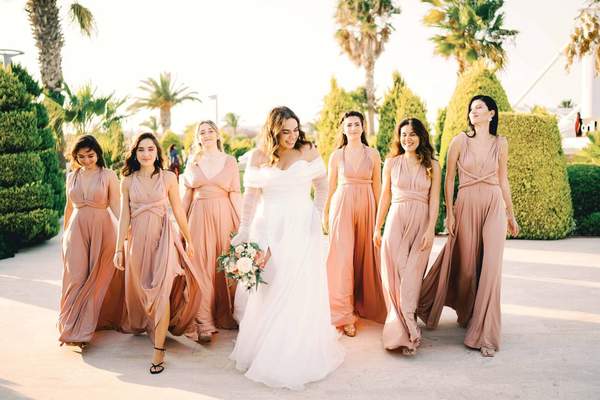
One bridesmaid wants a halter neckline, another prefers covered shoulders, and a third needs a bra-friendly style. Choosing identical dresses can make those reasonable preferences surprisingly complicated. Convertible bridesmaid dresses offer a middle ground: the wedding party shares a colour and silhouette while everyone adjusts the bodice.
The result depends on more than clever tying. Fabric, fit, support and styling rules all matter. Here is how to make a flexible dress feel polished rather than improvised.
What Makes a Bridesmaid Dress Convertible?
Many multiway bridesmaid dresses have two long fabric panels attached at the waist or bodice. Wearers cross, twist, spread or wrap them into different necklines. These are often called infinity bridesmaid dresses. Other designs use detachable straps, adjustable sleeves or a fixed bodice with several tying options.
A stretchy infinity dress behaves differently from a lined chiffon gown with convertible straps and a zipper. Check the exact dress, fastening method and manufacturer’s approved styles instead of assuming every version works identically.
Neckline Options Worth Trying
Classic V-Neck
Spread one panel over each shoulder, then take the lengths towards the back or around the waist as instructed. A V-neck creates a balanced shape and may accommodate a suitable bra. Flatten the panels across the bust rather than pulling them into narrow ropes.
Halter Neck
Bring the panels upwards and secure them behind the neck according to the supplier’s guide. The look exposes the shoulders and creates a clean line in photographs. Check neck pressure first: a halter that feels fine briefly may become uncomfortable during a long ceremony.
One-Shoulder Wrap
Direct both panels over one shoulder and secure the remaining lengths as instructed. The asymmetry looks especially effective beside simpler necklines. Test it while lifting your arms and sitting; the covered side should not pull the opposite side out of place.
Cap-Sleeve Effect
Some wrap bridesmaid dresses allow wide panels to spread over the upper arms. This gives light shoulder coverage without changing the skirt. Loose panels can slide, so practise the arrangement and check the manufacturer’s advice before adding discreet fashion tape.
Cross-Back Style
Crossing panels behind the shoulders adds interest to the back view and changes where the dress feels supported. Keep the crossing point comfortable. A dramatic open back can also restrict underwear choices, even when the front appears modest.
Start With the Fit, Not the Knot
Convertible does not mean universally sized. Measure bust, natural waist and hips, then use the specific brand’s chart. On a zippered gown, the bodice must fit before the straps are arranged. Stretch fabrics allow more give, but waist comfort, coverage and skirt length still need checking.
Try the dress with ceremony shoes and planned underwear. The hem should allow walking, and the waist should stay put when sitting. If shortening is needed, arrange alterations after deciding on shoes and waist position. A bridesmaid dress lengths guide can help everyone agree on hemlines.
Support and Coverage Are Part of the Design
A flexible neckline does not guarantee bust support. Some infinity dresses include a matching bandeau for extra coverage; others have lining or structured bodices. Check what is included. Anyone needing a conventional bra may prefer wide shoulder panels and a covered back.
Test the final tie in good lighting: bend, raise both arms, sit, walk and turn. Watch for side gaps, slipping fabric, visible underwear and uncomfortable knots. If a style cannot provide dependable coverage, choose another instead of planning to keep adjusting it.
Fabric Determines How the Wrap Behaves
Stretch jersey typically drapes and wraps easily, but thin fabric may reveal underwear lines. Heavier knits can feel warmer. A lined chiffon convertible wedding party dress may look more structured and airy, yet chiffon generally has little stretch. Check the specific garment’s composition and care instructions.
Order physical swatches when possible. Two dresses called sage green may differ because of fabric texture, dye lots or lighting. Compare colours in daylight and near the venue’s expected light. Our bridesmaid dress fabrics guide can help when assessing drape and opacity.
Coordinate the Group Without Matching Every Neckline
Controlled variety often works best. Set a common colour, fabric, skirt length and formality, then offer a few approved necklines. For example, a group of five might combine V-necks, a halter and one-shoulder looks with matching floor-length skirts. Their outfits will feel intentional rather than random.
Share a reference board showing options from the actual supplier before ordering. Consider ceremony dress requirements, bouquets and everyone’s comfort. A bridesmaid colour palette guide can help coordinate dresses with flowers and accessories.
Rehearse Before the Wedding Morning
Have everyone photograph her chosen front, side and back views at a fitting. Save the supplier’s tutorial and practise until the tie is repeatable. Ask someone to help with back knots on the day. Secure straps as directed, keep dangling ends off the floor and test the dress while moving.
Leave time for final adjustments during preparations. The goal is a neckline already tested for comfort, not an elaborate experiment minutes before the ceremony. Similar jewellery can provide visual consistency without making everyone identical.
Frequently Asked Questions
Are convertible bridesmaid dresses flattering for different body types?
They can suit varied preferences because each wearer chooses her neckline and coverage. Results still depend on measurements, fabric weight, skirt shape and support. Adjustable styling cannot rescue a badly fitting dress.
Can bridesmaids wear bras with multiway dresses?
Often, yes, with some ties. Wider shoulder panels and covered-back styles may conceal conventional straps. Open-back, one-shoulder and halter arrangements might need different undergarments. Test everything together before the wedding.
Do infinity dresses need alterations?
Sometimes. A stretchy waist may reduce bodice adjustments, but the hem may need shortening. Structured convertible gowns can still require standard alterations. Allow time for a fitting.
Should every bridesmaid use the same tying method?
Not necessarily. Matching colour, fabric and length can provide continuity when neckline options are selected beforehand. For a particularly formal or symmetrical look, limit choices to one or two styles.
A Flexible Dress Still Needs a Plan
Convertible bridesmaid dresses work best when personal choice fits within a shared vision. Choose a reliable base dress, confirm each person’s fit and support, agree on a few necklines and practise the ties. Those steps keep the flexibility appealing while helping everyone feel comfortable and prepared.