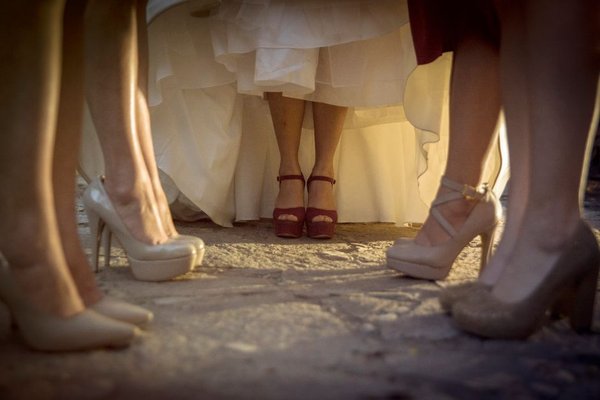
A beautiful pair of bridesmaid shoes can look perfect beside a dress on a hanger and feel completely wrong halfway through the wedding. The difference often comes down to details that are easy to overlook: a ceremony on grass, a long walk between venues, or a dress hem measured while wearing a different heel. Choosing footwear is less about finding the fanciest pair and more about making the outfit work throughout the day.
The best wedding party shoes balance three things: the look everyone wants, the surfaces everyone will cross, and the time bridesmaids will spend standing or moving. Start with those questions before comparing colors and embellishments.
Let the Wedding Venue Guide the Choice
Picture the full route, not just the ceremony backdrop. Bridesmaids may cross a lawn for photographs, climb steps to a reception room, and dance on a polished floor. A shoe that works in one location might be awkward in another.
Gardens, Gravel, and Beaches
Thin stiletto heels can sink into soft ground or catch between paving stones. Block heels, wedges with stable soles, and bridesmaid flats are often more practical for gardens or uneven paths. Heel protectors may help on some lawns but cannot make every surface safe.
For beach ceremonies, sand changes the equation. Flat sandals may work better than heels, depending on the dress code. Check whether the route also includes boardwalks, rocks, or hot pavement.
Indoor Venues and Formal Settings
Ballrooms allow more flexibility, although polished floors can be slippery. Check the outsole for grip and make sure the shoe stays secure when turning. Older buildings may have stairs or cobblestones, so ask about walking routes before choosing delicate footwear.
Choose a Heel Height You Can Actually Wear
Bridesmaid heels do not need to be high to look dressy. A modest block heel adds height while providing a broader base than a narrow heel. Kitten heels offer a delicate silhouette. Platforms change how the height feels but may also add weight.
Comfort is personal. Someone accustomed to heels may be happy in a style another bridesmaid finds exhausting. Test whether you can walk naturally, stand without shifting your weight constantly, and manage steps. Do not choose height solely to make the wedding party appear uniform.
Bridesmaid Flats Can Be Just as Elegant
Flats are useful for long ceremonies, outdoor celebrations, and anyone who prefers lower footwear. Pointed-toe designs, dressy ballet flats, and refined sandals can all suit a formal occasion. A pointed shape may look sleek, but it should not squeeze the toes.
Look for a secure heel, adequate room across the forefoot, and a sole that does not slip unexpectedly. Completely flat, unsupportive shoes are not automatically comfortable bridesmaid shoes. Good fit and the wearer’s preferences matter more than the style label.
Coordinate the Shoes Without Demanding Identical Pairs
Matching every shoe can create a polished photograph but may force different feet into one uncomfortable design. A more flexible approach is to agree on a color family, finish, or level of formality. Champagne sandals, neutral block heels, and metallic flats can still look cohesive.
There is no single universal nude shade. Shoes close to each person’s skin tone can look understated, while contrasting styles can look intentional. Gold, silver, and rose gold also reflect light differently beside warm or cool dress fabrics.
Compare the real dress fabric with the shoes in daylight. Online photographs can make ivory look white and champagne appear pink. A wedding color palette guide can help narrow the options without requiring everyone to buy identical pairs.
Check the Dress Hem Before the Final Fitting
Shoe height determines where a floor-length dress falls. Hemming a gown while wearing tall heels, then switching to flats, may leave fabric dragging underfoot. Switching from flats to heels can make the hem look unexpectedly short.
Bring the intended ceremony shoes to alterations appointments and explain any reception shoe change to the tailor. If you plan to swap, consider a second pair with similar effective height. A bridesmaid dress length guide can help explain how different silhouettes should clear the ground.
At a garden wedding with a gravel path and an indoor dinner, for example, a bridesmaid might wear low block heels for the ceremony and cushioned flats for dancing. This works best when both pairs are considered during the fitting, not when the second pair is purchased at the last minute.
Test Comfort Before the Wedding Day
Try prospective shoes indoors on a clean surface while returns are still possible. Walk, turn, stand for several minutes, and use stairs where safe. Watch for heel slip, toe pressure, rubbing straps, and whether your feet feel secure without gripping with your toes.
Check both feet because sizes and shapes may differ. Adjustable straps and the correct width usually matter more than decorative padding. Insoles or heel grips can help minor issues but should not compensate for badly fitting shoes.
Wear the chosen pair for short periods at home if the material permits. Persistent pain or numbness is a reason to change shoes, not a challenge to endure.
Plan for Weather and a Backup Pair
Rain makes grass soft and pavements slick, while heat can change how snug shoes feel. Check the forecast and ask the couple about outdoor photography locations. Grip and stability deserve extra attention in wet conditions.
Pack a tested backup pair that works with the dress length. Plasters, a small cleaning cloth, and spare fasteners can go in a wedding day accessory checklist. A backup is little help if it makes the hem a tripping hazard or slips off during dancing.
Frequently Asked Questions
What color should bridesmaid shoes be?
That depends on the dresses and the couple’s preferences. Neutral, metallic, or matching shades can work. Compare actual fabrics and agree on a color range if everyone is choosing different styles.
Are flats acceptable for bridesmaids?
Yes, when they fit the agreed dress code. Dressy bridesmaid flats can look polished and may be more practical for uneven venues or long periods standing.
Should bridesmaids wear the same heel height?
Not necessarily. Individual comfort and dress alterations matter more than identical heel heights. Coordinated color or finish can still create a consistent look.
When should bridesmaids buy their shoes?
Ideally, before the final dress fitting so the hem can be adjusted to the chosen footwear. Allow time to check sizing, test comfort, and exchange an unsuitable pair.
Make the Shoes Fit the Day, Not Just the Photo
The right bridesmaid shoes fit the entire wedding plan. Consider the venue, walking route, dress hem, and hours between the first photograph and the last dance. When style choices are flexible enough to respect different feet, the wedding party can look coordinated without sacrificing comfort. Shoes that let you move confidently will always feel more elegant than a pair you cannot wait to remove.