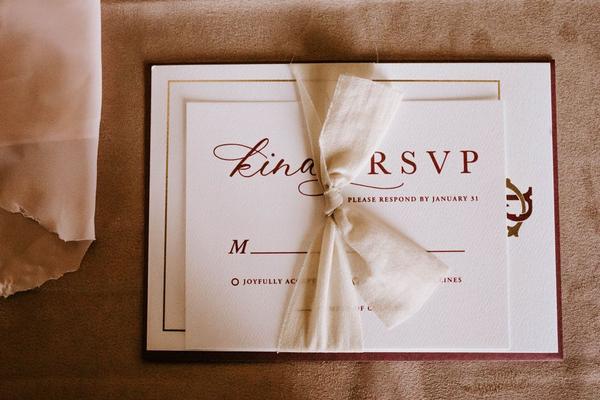
A wedding RSVP deadline can look like a small detail on an invitation, but it determines when your guest list becomes usable. Your caterer needs a reliable meal count, your venue needs to know how many places to set, and you need enough time to sort out missing replies without spending the final week chasing people.
For most weddings, set the RSVP due date about three to four weeks before the celebration. That is a starting point, not a rule carved in stone. The better approach is to find the earliest date a vendor needs confirmed information, then work backward.
When Should Wedding RSVPs Be Due?
A wedding response deadline three to four weeks before the event usually gives guests a reasonable decision window and leaves you time for follow-ups. Invitations for a typical local wedding often go out six to ten weeks beforehand, although your circumstances may call for a different schedule.
A two-week deadline can work when vendors accept late numbers and almost everyone responds promptly. It becomes risky if meals must be preselected, seating materials are professionally printed, or relatives are traveling from abroad. An earlier date is sensible when any of those details have longer lead times.
Start With Your Vendors, Not a Calendar Template
Confirm the final headcount date
Ask the caterer and venue for the exact deadline for guaranteed guest numbers, children’s meals, dietary requirements, and changes after submission. Some contracts allow additions but not reductions once the guarantee is locked. Others charge for the confirmed minimum even if people do not attend. Check the actual terms instead of assuming every venue operates alike.
Include seating and stationery deadlines
Your catering deadline might not be the first one that matters. A stationer printing place cards, escort cards, or a seating chart may need names and table assignments earlier. Rental companies may also need final chair and table quantities. Identify the earliest firm cutoff and leave time to prepare what that supplier needs.
Build in a follow-up buffer
Ideally, keep at least a week between the public RSVP deadline and your first non-negotiable vendor cutoff; longer is helpful if many responses arrive by post. That gap is for contacting nonresponders, confirming plus-ones and children, checking meal choices, and catching mistakes. It is not spare time you should automatically give away.
A Realistic Wedding RSVP Deadline Example
Imagine your wedding is on July 18. The caterer wants guaranteed numbers by July 7, and the seating chart printer needs the final layout by July 9. You could ask guests to reply by June 20, four weeks before the wedding. Then June 21 through June 27 becomes your follow-up window, leaving extra days to prepare tables and double-check dietary notes before July 7.
Now imagine instead that you printed July 5 on the response card. Any missing replies would leave only two days before the catering cutoff. A few unanswered messages or a lost reply card could force rushed, expensive decisions. The earlier date works because it protects the tasks that follow it.
A simple planning habit helps: put three separate dates in your calendar—guest RSVP due date, follow-up completion date, and final vendor submission date. Treat them as different milestones.
Account for Travel, Holidays, and How Guests Reply
Guests flying internationally may need to arrange leave, passports, flights, and accommodation well before ordinary invitations are mailed. Send save-the-dates early and share travel details in advance. For a destination wedding, an earlier RSVP deadline may be appropriate, but do not demand an impossibly early commitment from people still waiting on practical details.
If the RSVP due date falls during a major holiday or school break, move it a little earlier or later so it does not get buried. Postal replies also need transit time. Guests using a physical card should mail it before the date shown; online forms and email responses can be received much closer to the cutoff.
Clear instructions reduce confusion. If guests can respond online, explain where to do it and provide another option for those who are less comfortable with digital forms.
What to Put on the Invitation
Use an unambiguous date, such as “Kindly reply by June 20,” rather than “RSVP four weeks before.” A reply card should ask who is attending, not just whether somebody from the household plans to come. When relevant, request meal selections and dietary information at the same time.
Match the names on your invitation list to the response records, including any specifically invited children or plus-ones. This prevents a reply saying “we’re all coming” from unexpectedly increasing the headcount. Related planning topics worth keeping nearby are wedding RSVP wording examples, how to organize a wedding guest list, and wedding seating chart planning.
How to Handle Missing and Late Wedding RSVPs
Before the deadline
A brief, friendly reminder a few days before the date can help, especially when replies are collected online. Avoid sending repeated demands while guests still have time to answer.
After the deadline
Contact nonresponders individually by the method they are most likely to notice. Keep the message warm and specific: “We’re finalizing our numbers and haven’t received your reply. Could you let us know by Friday whether you can join us?” Give a clear final response time that still fits your vendor schedule.
Track the result immediately. A spoken yes should also include the guest’s meal selection, any dietary needs, and confirmation of who is attending. Do not count silence as an acceptance.
After the vendor count is locked
A late wedding RSVP is not always possible to accommodate. Check with your venue before promising a seat or meal, particularly if the room is at capacity or the caterer cannot adjust the order. Explain the limitation politely and consistently. If somebody who accepted later cancels, inform the relevant vendor promptly, even if the payment guarantee cannot be reduced.
Frequently Asked Questions
Is four weeks before the wedding too early for RSVPs?
Usually not. Four weeks is a practical choice for many weddings, especially when you need a week or more to follow up. Check that guests receive invitations with enough time to decide.
Can I set the RSVP deadline six weeks before the wedding?
Yes, if travel logistics or early supplier deadlines justify it. Tell guests the plans they need to make and send invitations or advance information early enough to make that date fair.
Should I assume guests who do not RSVP are coming?
No. Contact them directly before submitting your final count. An unanswered invitation should never become an automatic extra place setting.
What if someone changes their RSVP after the deadline?
Ask your venue or caterer what changes remain possible, then confirm the outcome with the guest. Avoid guaranteeing an added seat until the supplier approves it.
Choose a Deadline That Leaves You Room to Plan
The best wedding RSVP deadline is the date that gives guests a fair chance to respond while protecting your final catering, seating, and printing commitments. Start with three to four weeks before the wedding, check every firm vendor cutoff, and reserve a genuine follow-up window. That way, your guest count becomes a dependable plan rather than a last-minute guess.