A New Kind of Wedding Feast
Wedding food has always carried more meaning than people sometimes realize. It is not just something served between the ceremony and the dancing. It is part of the rhythm of the day, part of the guest experience, and often one of the details people remember long after the flowers have faded and the music has stopped. In recent years, vegan wedding catering services have become a thoughtful choice for couples who want their celebration to feel personal, modern, and deeply connected to their values.
A plant-based wedding menu no longer means a plate of plain vegetables or a small side salad while everyone else enjoys the main meal. That old idea has thankfully moved on. Today, vegan wedding catering can be colorful, generous, elegant, comforting, playful, and surprisingly familiar. It can include rich pastas, layered mezze, fragrant curries, roasted seasonal vegetables, delicate canapés, handmade desserts, and beautifully plated courses that feel completely wedding-worthy.
The best vegan wedding menus are not built around what is missing. They are built around abundance. Fresh herbs, grains, legumes, fruits, vegetables, nuts, seeds, spices, sauces, and creative cooking techniques can come together in ways that feel full and satisfying. Done well, plant-based catering does not feel like a compromise. It feels like a celebration in its own right.
Why Couples Choose Vegan Wedding Catering
Every couple comes to vegan wedding food from a slightly different place. Some are vegan themselves and want the entire wedding to reflect the way they live every day. Others may be drawn to plant-based catering for environmental reasons, animal welfare, health preferences, cultural flexibility, or simply because they enjoy fresh, creative food. Sometimes one partner is vegan and the other is not, so the menu becomes a gentle meeting point between personal values and guest comfort.
There is also something quietly meaningful about serving food that feels intentional. Weddings are full of choices, and the meal is one of the most shared experiences of the day. Choosing vegan wedding catering services can be a way to say, without making a speech about it, that the celebration is rooted in care. Care for guests, care for the planet, care for animals, and care for the couple’s own sense of identity.
Of course, the food still has to taste good. Values may inspire the choice, but flavor is what makes the meal memorable. A thoughtful vegan wedding menu should feel inviting to everyone at the table, including guests who may not usually eat plant-based meals.
Plant-Based Menus That Feel Generous
One of the most important qualities of a successful vegan wedding menu is generosity. Wedding guests should never feel as though they are being given a smaller or less exciting version of a traditional meal. The menu needs texture, warmth, richness, freshness, and enough variety to keep the meal interesting from start to finish.
A plant-based menu might begin with small bites such as mushroom tartlets, roasted tomato crostini, spiced cauliflower skewers, avocado and citrus spoons, or mini falafel with tahini. These little moments help guests ease into the meal without feeling that the food is trying too hard to announce itself as vegan.
For the main course, the possibilities are wider than many people expect. There might be handmade ravioli filled with squash and sage, a rich lentil and vegetable wellington, grilled eggplant with pomegranate and herbs, coconut curry with jasmine rice, risotto with wild mushrooms, or a colorful Mediterranean spread of flatbreads, dips, grains, and roasted vegetables. The key is balance. A good menu should have substance as well as freshness.
The Role of Seasonality in Vegan Wedding Food
Seasonality matters in every kind of wedding catering, but it becomes especially important in plant-based menus. When vegetables, fruits, herbs, and grains are at the center of the plate, their quality makes all the difference. A tomato in peak summer can feel almost luxurious. Winter squash, properly roasted and seasoned, can bring depth and comfort. Spring peas, asparagus, herbs, and citrus can make a menu feel bright and alive.
Seasonal vegan wedding catering also helps the food feel connected to the time and place of the celebration. A summer wedding might lean toward chilled soups, grilled vegetables, fresh salads, stone fruit, herbs, and lighter desserts. An autumn wedding may feel better with roasted root vegetables, mushrooms, warm grains, figs, apples, and deeper spices. Winter menus can be rich and cozy, with hearty stews, layered pastries, braised greens, and chocolate desserts. Spring invites freshness, delicate greens, edible flowers, and soft colors on the plate.
This sense of timing gives the meal a natural elegance. Rather than forcing ingredients into a theme, the menu grows out of the season itself.
Making Vegan Food Welcoming for All Guests
One concern couples sometimes have is whether non-vegan guests will enjoy a fully plant-based menu. It is a fair thought, especially when family members or friends have strong expectations about wedding food. The answer usually lies in familiarity, flavor, and presentation.
A menu does not need to imitate meat or dairy at every turn to feel satisfying. In fact, some of the most successful vegan wedding dishes are simply excellent dishes that happen to be plant-based. Guests are more likely to respond warmly when the food feels recognizable and inviting. A beautifully made pasta, a fragrant rice dish, crisp potatoes, grilled bread, rich sauces, fresh salads, and indulgent desserts can win people over without explanation.
It also helps when the menu has a sense of flow. Instead of presenting vegan food as a statement, the meal can simply unfold naturally. Guests notice the colors, aromas, textures, and care. By the time dessert arrives, many may not be thinking about the absence of animal products at all.
Appetizers and Small Plates With Personality
The cocktail hour is a wonderful place for vegan catering to shine. Small bites allow for variety, creativity, and a little surprise. They also give guests a relaxed introduction to the food before the seated meal begins.
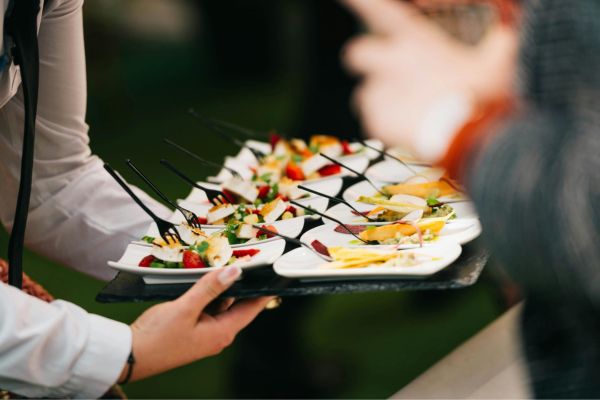
Plant-based appetizers can be elegant without being fussy. Think crisp polenta squares with tomato relish, cucumber rounds with herbed cashew cream, roasted beet bites with citrus, vegetable spring rolls, stuffed dates, mini tacos, sesame noodles served in small cups, or grilled flatbread with seasonal toppings. These dishes are easy to enjoy while standing and chatting, which is exactly what cocktail hour needs.
Small plates also allow the menu to reflect different flavors from around the world. Vegan food works beautifully with Mediterranean, Middle Eastern, Indian, Thai, Mexican, Japanese, and modern European influences. This gives couples room to create a menu that feels personal rather than predictable.
Main Courses That Feel Complete
The main course is where plant-based wedding catering must be especially thoughtful. A good vegan main dish should have enough structure to feel like the center of the plate. It should not look like several side dishes placed together without a clear idea.
A satisfying main course often includes a protein-rich element, a vegetable centerpiece, a grain or starch, and a sauce that brings everything together. Lentils, beans, chickpeas, tofu, tempeh, mushrooms, nuts, and seeds can all add depth and substance. Grains such as farro, rice, quinoa, couscous, or barley can create comfort. Sauces are especially important because they add richness, moisture, and personality.
A mushroom wellington, for example, can feel festive and traditional while remaining fully plant-based. A roasted cauliflower steak with spiced chickpeas and tahini can look dramatic on the plate. A vegetable tagine with couscous feels warm and aromatic. A handmade pasta with cashew-based cream sauce can be indulgent without relying on dairy. The best dishes feel complete, not apologetic.
Vegan Wedding Desserts Beyond Fruit Plates
Dessert is often where guests expect richness, so vegan wedding desserts need to feel every bit as celebratory as the rest of the meal. Fortunately, plant-based baking has come a long way. Cakes, tarts, mousses, cookies, doughnuts, cupcakes, and plated desserts can all be made without eggs or dairy when handled with skill.
A vegan wedding cake might feature vanilla sponge with berry compote, chocolate cake with espresso frosting, lemon and elderflower layers, coconut cream, almond sponge, or seasonal fruit fillings. The texture should be soft, the flavors balanced, and the finish beautiful enough for the cake-cutting moment.
Beyond cake, couples may choose dessert tables with brownies, macarons made with aquafaba, fruit galettes, mini cheesecakes with nut-based fillings, sorbets, or chocolate truffles. The goal is not to make dessert feel “healthy” unless that is truly the couple’s preference. A wedding dessert should feel joyful, a little indulgent, and worth saving room for.
Presentation and the Visual Side of Plant-Based Catering
Wedding food is experienced with the eyes before the first bite. This is especially true for vegan menus, where color and freshness can be major strengths. A plant-based table can be visually stunning because vegetables, fruits, herbs, edible flowers, grains, and sauces naturally bring a wide range of colors and shapes.
Presentation does not need to be overly polished. In fact, many vegan wedding menus look best when they feel abundant and natural. Platters of roasted vegetables, bowls of bright salads, herb-filled dips, rustic breads, colorful sauces, and seasonal fruit can create a generous, almost painterly effect. For plated meals, thoughtful composition matters. The dish should have height, contrast, and enough negative space to feel elegant.
The visual style should also match the wedding itself. A garden wedding may suit loose, organic presentation. A city wedding might call for cleaner plating. A rustic celebration may look beautiful with family-style dishes. A formal evening reception may need a more refined course-by-course approach.
Buffet, Family-Style, or Plated Service
The serving style can change the entire feeling of a vegan wedding menu. A plated dinner feels formal and carefully paced. It allows each dish to be presented with precision and can make the meal feel elegant. A buffet offers variety and works well when guests have different preferences. Family-style service feels warm and communal, with shared dishes passed around the table.
Vegan wedding catering services can work beautifully in any of these formats, but each one requires planning. Buffets need dishes that hold well and remain attractive over time. Plated meals need careful timing so each course arrives fresh. Family-style service needs generous portions and table space for shared platters.
The right choice depends on the venue, guest count, atmosphere, and budget. More than anything, it should support the kind of experience the couple wants. Some weddings feel best with a slow, formal dinner. Others feel more natural with relaxed sharing plates and conversation flowing across the table.
Cultural Influences and Personal Food Stories
One of the loveliest things about vegan wedding catering is how easily it can include cultural flavors. Many traditional cuisines already have plant-based dishes or can be adapted beautifully. Indian menus may include dals, vegetable curries, rice dishes, chutneys, and breads. Middle Eastern food offers hummus, baba ganoush, falafel, tabbouleh, stuffed grape leaves, and spiced vegetables. Mediterranean menus can include olives, grilled vegetables, beans, pastas, and fresh herbs.
Food can also carry family memories. A couple might include a plant-based version of a dish from childhood, a dessert inspired by a grandparent, or flavors from a place they traveled together. These personal touches make the menu feel less generic and more connected to the people at the center of the celebration.
The strongest wedding menus often have this kind of quiet intimacy. They are not only about feeding guests. They are about sharing a little piece of the couple’s world.
Sustainability and Thoughtful Choices
For many couples, vegan wedding catering services are part of a broader interest in sustainability. Plant-based menus can support a lower-impact celebration, especially when combined with seasonal ingredients, local sourcing, reduced food waste, compostable practices, and reusable service pieces.
Still, sustainability works best when approached thoughtfully rather than rigidly. A wedding is a complex event, and perfection is rarely realistic. Small choices can still matter. Choosing seasonal produce, avoiding excessive packaging, planning portions carefully, and donating safe leftover food where possible can all make the catering feel more responsible.
The beauty of this approach is that it does not need to make the wedding feel less elegant. In many cases, sustainable choices add depth and meaning. They help the celebration feel rooted in awareness without taking away from the joy of the day.
Creating a Menu That Feels Like a Celebration
The heart of vegan wedding catering is not restriction. It is imagination. A plant-based menu can be soft and romantic, bold and colorful, refined and minimal, rustic and abundant, or deeply comforting. It can suit a black-tie dinner, a countryside gathering, a beach ceremony, or a small backyard wedding.
What matters most is that the food feels cared for. Guests can sense when a menu has been thoughtfully created. They notice when the bread is warm, when the sauce is flavorful, when the vegetables are cooked properly, when dessert feels special, and when the meal fits the mood of the day.
Vegan food has the ability to surprise people in the best way. It can gently change expectations without making the meal feel like a lesson. At a wedding, that matters. The food should invite people in, not separate them into categories.
Conclusion
Vegan wedding catering services have opened the door to wedding menus that feel fresh, meaningful, and full of possibility. A plant-based menu can be elegant without being formal, generous without being heavy, and personal without needing to explain itself. When built around good ingredients, thoughtful seasoning, beautiful presentation, and a clear sense of occasion, vegan wedding food can stand proudly at the center of the celebration.
A wedding meal should feel like part of the story. It should reflect the couple, welcome the guests, and add warmth to the day. Plant-based catering does all of that with a quiet kind of grace. It reminds us that celebration does not have to follow old rules to feel complete. Sometimes, the most memorable feast is the one that feels thoughtful, colorful, and alive from the very first bite.