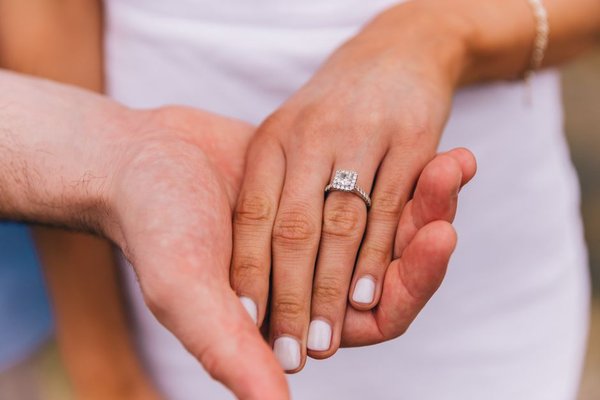
When an engagement ring catches the light across a room, the effect is not mainly about carat weight or a high colour grade. Much of that visual energy comes from cut. Its facet proportions and workmanship control how efficiently light returns to the eye. That is why diamond cut for engagement rings deserves serious attention: a beautifully cut stone can look bright and lively, while a poorly cut diamond may appear flat even if its other grades look impressive on paper.
What diamond cut actually means
Cut is often confused with shape. Round, oval, pear, cushion and emerald describe a diamond’s outline and facet style. Cut quality, by contrast, describes how well the diamond’s design and workmanship produce an attractive face-up appearance. For standard round brilliant diamonds in the D-to-Z colour range, GIA evaluates cut using brightness, fire, scintillation, weight ratio, durability, polish and symmetry.
Brightness is the white light returned from the diamond. Fire is the separation of white light into flashes of spectral colour. Scintillation is the pattern of light and dark areas, along with the flashes that appear as the diamond, light source or viewer moves. Together, these qualities create the diamond sparkle shoppers notice.
Why cut has such a strong effect on sparkle
A diamond’s facets work together as a three-dimensional optical system. If the crown and pavilion angles, table size, depth and facet relationships are well balanced, light returns in a pleasing pattern. If the proportions are poorly coordinated, more light can escape or distracting dark areas can appear.
This is why there is no single magic table percentage or depth measurement that guarantees diamond brilliance. Proportions interact. Two round diamonds with similar headline measurements can still perform differently because their angles, minor facets, polish and symmetry are not identical.
Understanding the diamond cut grade
GIA assigns standard round brilliant diamonds one of five cut grades: Excellent, Very Good, Good, Fair or Poor. The grade reflects the overall combination of appearance, design and craftsmanship. Excellent and Very Good grades are sensible places to focus when sparkle is a priority.
The term ideal cut diamond can cause confusion. “Ideal” is not one of the five grades on GIA’s standard round-brilliant cut scale. Some retailers use it for their own top ranges, while GIA also offers a supplemental AGS Ideal report for eligible diamonds. Compare the grading laboratory, the specific report and the stone itself rather than assuming every use of “ideal” means the same thing.
Polish and symmetry still matter
Polish refers to the quality of the facet surfaces, while symmetry considers the precision of the outline and facet placement. Both contribute to the overall assessment. You may also see “triple excellent” used for a round diamond with Excellent grades for cut, polish and symmetry. It is a useful shorthand, not a substitute for viewing the diamond.
Cut can be a smarter place to protect your budget
Engagement-ring budgets usually involve trade-offs between the 4Cs. A common mistake is protecting carat weight at all costs while accepting a weaker cut. Imagine choosing between a 1.00-carat round brilliant with a Good cut and a 0.90-carat stone with an Excellent cut. The larger stone is heavier, but the smaller well-cut diamond may look more energetic because of stronger light return. A deeply cut stone can also hide weight where it adds little face-up size.
A practical approach is to choose a comfortable size range, then protect cut quality before stretching for tiny improvements in colour or clarity that may be difficult to see without close inspection. Guides to the 4Cs of diamonds and diamond clarity grades explained can help with those trade-offs.
How to judge sparkle before buying
For a round brilliant, start with an independent grading report and check the overall cut grade, polish and symmetry. Then look beyond the document. View the diamond face-up and from slight angles, moving it slowly rather than keeping it fixed under intense jewellery-store spotlights. Look for a balanced pattern rather than a dominant dead or dark area.
Compare diamonds under more than one lighting environment when possible. Spotlights can create dramatic flashes, while softer ambient light can make brightness and pattern easier to judge. Online, compare high-resolution videos under similar conditions and look for consistent liveliness rather than one dramatic flash.
What about oval, pear, cushion and other fancy shapes?
Fancy-shape diamonds need a different approach. GIA does not currently assign its standard overall cut grade to fancy shapes in the same way it does to standard round brilliants. Shoppers should pay closer attention to face-up appearance, symmetry, outline and light return.
Ovals, pears and marquises, for example, can show a bow-tie pattern across the centre. Some contrast can be attractive, but a strong dark bow tie may distract from the diamond’s brilliance. Cushion and radiant cuts vary widely in facet pattern, making side-by-side comparison useful. A diamond shapes for engagement rings guide can help narrow the options.
Cut and the engagement ring setting
The setting can support a diamond’s appearance, but it cannot repair weak cut quality. A halo or slim band may increase visual presence, but neither changes how efficiently the diamond handles light. Choose the diamond for strong visual performance, then select a setting that protects it and suits the wearer’s style. A guide to choosing an engagement ring setting can help with that second decision.
Frequently asked questions
Is cut the most important factor for diamond sparkle?
Cut is one of the strongest influences on brightness, fire and scintillation because it governs how the facets interact with light. Colour, clarity and size affect other aspects, but cut deserves high priority for sparkle.
Should I only buy an Excellent cut diamond?
Not necessarily. Excellent is the top GIA cut grade for standard round brilliants, but Very Good diamonds can also be attractive. Compare individual stones, prices and visual performance rather than treating the grade as the only decision point.
Does a bigger diamond sparkle more?
No. Carat measures weight, not light performance. A larger diamond with weaker proportions can look less lively than a smaller stone with a stronger cut.
Do fancy-shape diamonds have the same cut grades as round diamonds?
No. GIA’s standard overall cut grade applies to standard round brilliant diamonds in the D-to-Z colour range. Fancy shapes should be assessed more heavily by their proportions, symmetry, outline and visual light performance.
Prioritise what your eyes will notice
For an engagement ring worn and seen every day, cut offers unusually visible value. A strong diamond cut grade can guide the search for round brilliants, but the best buying process combines the report with careful visual comparison. Prioritise balanced brightness, fire and scintillation, and avoid paying for carat weight that adds little face-up presence. When sparkle is the goal, cut is not a finishing detail; it is the engine behind the effect.